Free Technique Guide · Paint It with Gita Stern
Textured Acrylic Painting Tutorial: Sculpt a Koisel with Molding Paste & Palette Knife
Textured painting is what turns a flat canvas into something you want to reach out and touch. Instead of painting a picture of the Koisel's stones, you build them — ridge by ridge — so real light and shadow do half the work for you. Best of all, texture is forgiving: every "mistake" just becomes another stone.
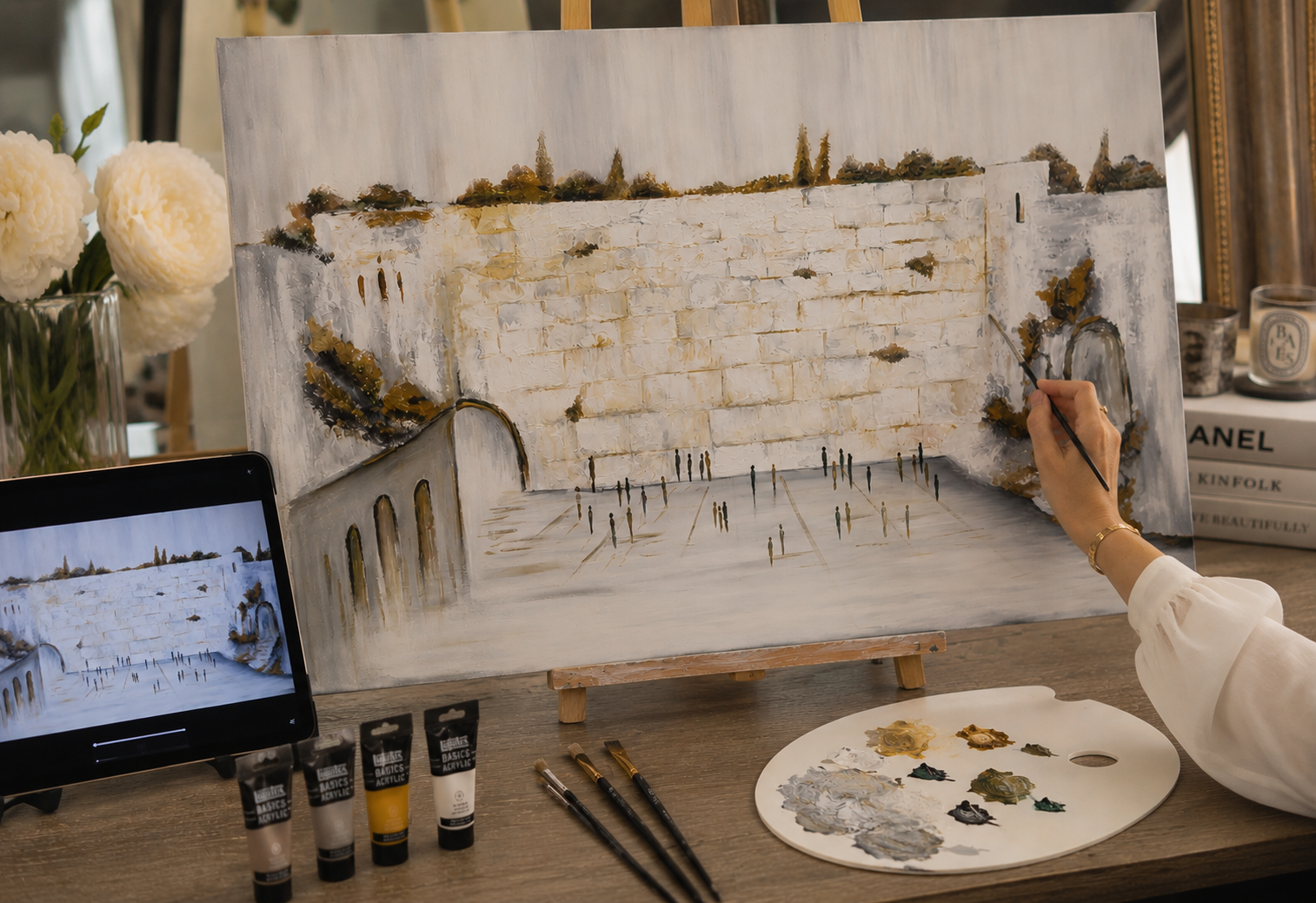
The three textured painting techniques you'll learn
1. Molding paste texture
Molding paste (also called modeling paste) is a thick, white acrylic medium that holds its shape as it dries. You spread it onto the canvas with a palette knife, sculpting each stone of the wall before any color goes down. Once dry, it gives you a permanent, paintable relief — the secret behind that dimensional Koisel look.
2. Palette knife painting
A palette knife lays down bold, broken strokes a brush simply can't make. Dragging acrylic color across the dried texture catches the ridges and leaves the valleys deep — instant aged stone, with no careful shading required.
3. Gold leaf finishing
A touch of gold leaf over the texture catches candlelight and window light alike, giving the finished painting its quiet glow. It's the final step that makes the piece feel like an heirloom.
Why texture is perfect for beginners
Smooth realism demands a steady hand. Textured painting demands the opposite — loose, confident movement. Because the stones are sculpted rather than drawn, there's no outline to get wrong, and the palette knife does the blending for you. It's the most forgiving way to create a painting that looks like it took years of practice.
Textured painting FAQ for beginners
What is molding paste, and do I really need it?+
Molding paste (also called modeling paste) is a thick, white acrylic medium that holds its shape as it dries. It's what you spread onto the canvas to sculpt the stones of the Koisel before any color goes down. If your goal is a dimensional, touchable wall rather than a flat picture of one, molding paste is the ingredient that makes it possible.
Is a palette knife hard to use?+
For this technique, no — and that's the good news. A palette knife does the blending for you: you drag acrylic color across the dried texture, the ridges catch the paint, and the valleys stay deep. There's no outline to get wrong and no careful shading required, which is exactly why textured painting is so forgiving for beginners.
How long does molding paste take to dry before painting?+
Thin layers are usually dry enough to paint over within a few hours, while thicker sculpted stones are best left overnight. Because acrylic paste is permanent once dry, taking your time here pays off — the texture won't budge when you layer color on top.
How do I apply gold leaf without making a mess?+
Keep it simple: gold leaf is applied in small accents over the finished texture — the final step that catches candlelight and window light alike and gives the piece its quiet glow. You press it onto tacky areas, brush away the loose flecks, and every little imperfection just reads as extra sparkle.
Do I need painting experience to start with texture?+
No. Smooth realism demands a steady hand, but textured painting demands the opposite — loose, confident movement. Because the stones are sculpted rather than drawn, there's no outline to get wrong. It's the most forgiving way to create a painting that looks like it took years of practice.
Ask the painting helper
Stuck on a technique? Ask away.
Type a question about molding paste, palette knives or gold leaf and get a friendly, AI-powered answer based on this tutorial.
Learn every step in the full 9-session course
This guide is a taste of the techniques taught stroke by stroke in the Paint It video series. Across 9 gentle sessions you'll go from blank canvas to a finished, framed Koisel masterpiece — supplies list included, no experience needed.